




Our Recommendations to Enrich Your Bookshelf
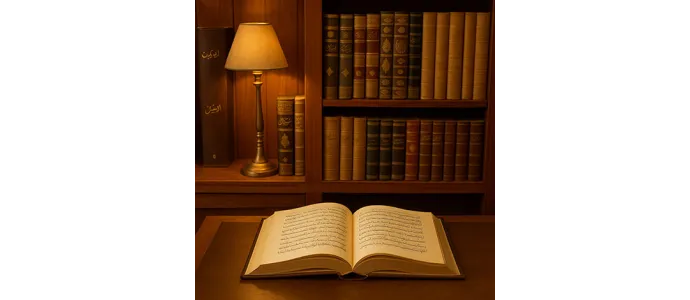
Build a strong Islamic library guided by Hilyat Ṭālib al-ʿIlm and its commentary: cultivate a love for books, choose evidence-based works, avoid misleading titles, and rely on core references (Ibn Taymiyyah, Ibn al-Qayyim, Ibn ʿAbd al-Barr, Ibn Qudāmah, and others).
The love of books — a sign of devotion to knowledge
The love of books has always been a mark of devotion to knowledge. The scholars of Islam viewed knowledge as the very breath of the soul — without it, the heart weakens as the body would without air. The more one learns, the greater the joy and fulfillment it brings. For this reason, students of knowledge have always cherished their books, collecting and selecting them carefully, seeking benefit rather than abundance.
Reading with discernment and purpose
As Shaykh Bakr Abû Zayd wrote in his Hilyat Ṭâlib al-ʿIlm, a sincere student must cultivate a deep affection for books: gathering, organizing, and preserving them with wisdom and balance. Yet he must avoid filling his shelves with weak or misleading works that cloud his understanding — especially those written by innovators in religion. Such books are a subtle poison. A true library is not built for display, but for growth: a means to strengthen comprehension, not to distract from it.
Building your library gradually
Shaykh Saʿd ibn Nâṣir al-Shathrî, in his Sharḥ Hilyat Ṭâlib al-ʿIlm, explains that one of the key etiquettes of a student regarding books is to build his library gradually, selecting concise and reliable works over lengthy and verbose ones. He must seek books that teach reasoning through evidence, and avoid the writings of those whose speech is excessive but insight limited. The goal is not the number of pages, but the clarity of understanding.
The foundation of a sound library
The foundation of a library lies in works grounded in deduction, deep reflection, and understanding of legal principles. Among the greatest references to be included are the writings of the two noble scholars: Shaykh al-Islâm Ibn Taymiyyah and his student Ibn al-Qayyim — known for their sharp reasoning, insight, and balance between text and understanding.
Along this same path stand the classics of great imams: Ibn ʿAbd al-Barr — especially al-Tamhîd; Ibn Qudâmah — al-Mughnî; al-Dhahabî, Ibn Kathîr, Ibn Rajab, Ibn Ḥajar, al-Shawkânî, al-Ṣanʿânî in Subul as-Salâm; Muḥammad ibn ʿAbd al-Wahhâb in ad-Durar as-Saniyyah; Ṣiddîq Ḥasan Khân; and Muḥammad al-Amîn ash-Shinqîṭî in Aḍwâʾ al-Bayân.
A mirror of the mind and a light for the heart
Building a library upon these sound foundations grants the student firmness in knowledge, depth of insight, and balance in understanding. A library is not a collection of paper, but a mirror of one’s intellect and a means of spiritual refinement. Whoever is granted a love for knowledge and for books has been blessed with one of the greatest doors of virtue — combining sincerity of intention with the pursuit of beneficial knowledge.
Comments
No comment at this time!
Leave your comment