

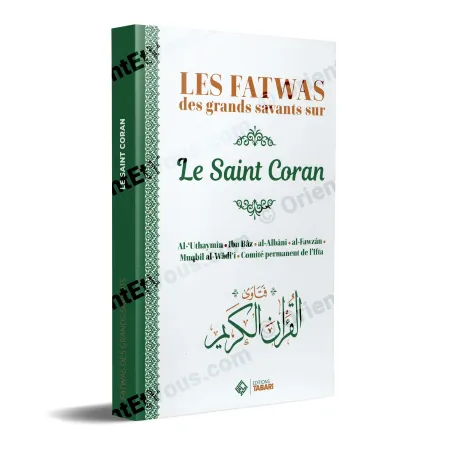
This French book gathers the fatwas great scholars festivals, providing a clear and reliable overview of the rulings related to major Islamic celebrations. “Les Fatwas des grands savants sur les fêtes islamiques” compiles authentic verdicts from Ibn Bâz, Ibn ‘Uthaymîn, al-Fawzân, al-Albânî, al-‘Abbâd and the Permanent Committee for Iftâ’.
Organized by themes, it covers fasting in Ramadan, sahûr, supplications, Eid rulings, zakât al-fitr, the first ten days of Dhûl-Hijja, the rules of sacrifice and the fasting of ‘Ashûrâ’.
With its concise and accessible approach, this French edition serves as an essential guide for understanding and practising Islamic celebrations according to authentic evidence.
This French book gathers the fatwas great scholars festivals, providing a clear and reliable overview of the rulings related to major Islamic celebrations. “Les Fatwas des grands savants sur les fêtes islamiques” compiles authentic verdicts from Ibn Bâz, Ibn ‘Uthaymîn, al-Fawzân, al-Albânî, al-‘Abbâd and the Permanent Committee for Iftâ’.
Organized by themes, it covers fasting in Ramadan, sahûr, supplications, Eid rulings, zakât al-fitr, the first ten days of Dhûl-Hijja, the rules of sacrifice and the fasting of ‘Ashûrâ’.
With its concise and accessible approach, this French edition serves as an essential guide for understanding and practising Islamic celebrations according to authentic evidence.
You might also like
![3D cover of “The Fatwas of the Great Scholars on the Tarawih Prayer” [French] – fatwas great scholars tarawih](https://orientetvous.com/16619-home_default/fatwas-great-scholars-tarawih-french.jpg)
![Perspective cover of the book Fatwas of the great scholars on Zakat al-Fitr [French], fatwas scholars zakat fitr](https://orientetvous.com/16622-home_default/fatwas-great-scholars-zakat-al-fitr.jpg)
![3D view of the book “Fatwas of the Major Scholars on the Sacrifice” [French], complete cover, fatwas major scholars sacrifice](https://orientetvous.com/16625-home_default/fatwas-major-scholars-sacrifice-french.jpg)
Fatwas of the Great Scholars on Islamic Festivals
Ibn ‘Uthaymîn • Ibn Bâz • al-Fawzân • al-Albânî • al-‘Abbâd • Permanent Committee for Iftâ’
Format: 12x16 cm
Pages: 178 pages
Language: French
This book, “Fatwas of the Great Scholars on Islamic Festivals”, offers a clear and reliable synthesis of the religious rulings that govern the main celebrations of the Muslim calendar. Drawing on the authentic legal opinions of Ibn Bâz, Ibn ‘Uthaymîn, al-Fawzân, al-Albânî, al-‘Abbâd and the Permanent Committee for Iftâ’, “Fatwas of the Great Scholars on Islamic Festivals” (book in French) provides a solid reference to understand and apply these practices in accordance with the Qur’an and the Sunnah.
The book is organized into thematic sections that make reading smooth and progressive. The first part deals with the fast of Ramadan: rules of sahûr, breaking the fast, recommended supplications, spiritual attitudes and the virtues of the last ten nights. These clarifications form an essential foundation for understanding the practices related to this blessed month, which are often imperfectly known.
The next section presents the rulings of the ‘Eid al-Fitr celebration. The scholars explain the beginning and formulations of the takbîr, recommended manners in the mosque, children’s participation, appropriate clothing, ritual washing, as well as practices to avoid. Through concrete situations, the reader benefits from precise and balanced guidance that can be directly applied in family and community life.
A full section is devoted to zakât al-fitr. The fatwas clarify its status, wisdom, what should be given, who is entitled to receive it, common mistakes and the correct way to distribute it. This presentation enables the reader to perform this purifying charity in accordance with the Sunnah while fully understanding its spiritual objectives.
The book then turns to the virtues of the ten days of Dhul-Hijjah, a period during which righteous deeds have an exceptional value. The scholars explain the restrictions related to cutting hair and nails for the one who intends to offer a sacrifice, the importance of renewing one’s intention and the spiritual preparation required from the believer. These explanations help the reader to approach this blessed period with balance and insight.
One of the most detailed parts of the book covers the rulings of the sacrifice (al-udhhiya). The scholars explain the ideal time to slaughter, the conditions of the animal, the defects that invalidate the sacrifice, lawful slaughter, the invocation, distribution of the meat and common mistakes. Specific cases are also discussed, such as the participation of a third party or the role of the butcher. To go further on this topic, it is recommended to consult the complementary volume Fatwas of the Great Scholars on Sacrifice .
The book concludes with the rulings related to the fast of ‘Ashûrâ’. It presents its virtues, spiritual meaning and the best ways to fast this day. Several legal nuances are also mentioned so that the reader can adopt the practice most in line with the textual evidence.
Through the scholars’ pedagogical approach and the precision of their opinions, this work becomes a complete guide for understanding the fatwas of the great scholars on Islamic festivals and applying their recommendations in an informed, authentic and balanced way.

No customer reviews for the moment.
![Fatwas contemporaines [Al-Albânî]](https://orientetvous.com/1605-home_default/contemporary-fatwas-al-albani-french-edition.jpg)
![Fatwas contemporaines [Grands Savants]](https://orientetvous.com/958-home_default/-french-ftawy-lmaʾ-albld-alhram.jpg)
![3D cover of Fatwas of the Great Scholars on the Newborn [French], Islamic fatwas about newborn rulings](https://orientetvous.com/16634-home_default/fatwas-great-scholars-newborn-french.jpg)

![Fatâwas Sur les Piliers de l'Islam [Al-Otheimine]](https://orientetvous.com/4199-home_default/-french-ftawy-arkan-alaslam.jpg)