
- -10%


A General History of al-Andalus in Islam offers a clear and structured overview of the main stages of Islamic presence and development in al-Andalus. This book in French traces the key periods of this history, from the initial conquest to the decline, highlighting the ruling dynasties, major events, and the lasting Islamic heritage in Andalusia.
A General History of al-Andalus in Islam offers a clear and structured overview of the main stages of Islamic presence and development in al-Andalus. This book in French traces the key periods of this history, from the initial conquest to the decline, highlighting the ruling dynasties, major events, and the lasting Islamic heritage in Andalusia.
You might also like

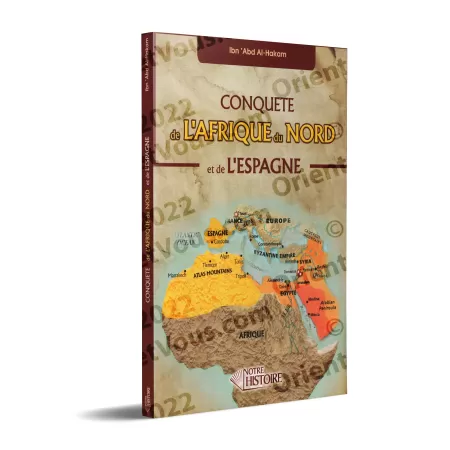


This book offers a structured synthesis of the history of al-Andalus in Islam, designed as a chronological panorama from the Muslim conquest of the Iberian Peninsula to the gradual disappearance of Islamic rule. Through a concise main text authored by Shaykh Hafiz ibn Ahmad al-Hakami and complemented by distinct explanatory annotations, it provides readers with a clear and coherent overview of the major political stages that shaped Muslim Andalusia.
The book’s primary aim is to give readers a readable and memorable historical thread. It does not present an exhaustive history, but rather a coherent framework that highlights turning points, dynastic shifts, and major political ruptures. Each period is treated as a distinct stage, helping the reader follow transitions and the succession of authorities without getting lost in excessive detail.
The narrative opens with the conquest of al-Andalus in 92 AH, associated with Tariq ibn Ziyad, within the expansion of the Umayyad Caliphate. It then outlines the early phases of territorial organization, before focusing on the arrival of Abd al-Rahman al-Dakhil and the consolidation of Umayyad rule in Cordoba, a decisive moment in the political formation of al-Andalus.
The book continues by presenting internal transformations that led to new dynasties, including the Hammudids, and then to the fragmentation of the territory into the Taifa kingdoms. This era is portrayed as a period of marked political divisions, with references to several notable ruling houses across different regions, illustrating the progressive weakening of Andalusi unity.
It then highlights the shift toward major powers coming from the Maghreb. The Almoravids, under Yusuf ibn Tashfin, followed by the Almohads, associated with Ibn Tumart, are presented as successive authorities seeking to reorganize the Andalusi space in a context of growing military pressure and territorial recomposition.
The final major stage in the history of al-Andalus in Islam is devoted to the state of Banu al-Ahmar, better known as the Nasrid kingdom of Granada. The book describes the last decades of Muslim rule, marked by internal turmoil, prolonged sieges, and a gradual deterioration of living conditions, leading to the political and human outcome that sealed the end of organized Muslim presence in the Iberian Peninsula.
Throughout these sections, the author highlights recurring causes behind this decline: internal rivalries, broken alliances, sustained military pressure, and material crises. The final events are presented as the culmination of a long process of retreat rather than a sudden rupture, allowing for a more nuanced understanding of the historical mechanisms at work.
The book is accompanied by a preface that situates the value of the main text and underlines the contribution of the annotations, which are intended to clarify events, historical figures, and key points of context. Biographical notes on the author and the annotator further help readers grasp the nature of the work and its pedagogical orientation.
Finally, appendices enrich the reading experience with historical maps by period and a presentation of emblematic remains of Andalusi heritage. These visual and cultural elements provide additional reference points for locating dynasties, territories, and the major stages of this history alongside the text.
By its brief yet rigorously organized format, this book is especially suited to readers seeking a reliable introduction to the history of al-Andalus in Islam. It offers a continuous narrative, clear chronological milestones, and complementary explanations that facilitate understanding of political turning points and their long-term consequences.
It also serves as a useful entry point for further exploration of related themes, including Moorish Civilization in Spain , by providing a solid and structured historical foundation.

No customer reviews for the moment.
![Les récits des prophètes [As-Sa'dî]](https://orientetvous.com/793-home_default/-french-qss-alanbyaʾ-llsdy.jpg)

![3D cover of the book Mothers of the Believers – reflections verse wives mothers [French]](https://orientetvous.com/16329-home_default/reflections-verse-wives-mothers.jpg)






![Histoire de "Adam et Hawwâ' - Abel et Caïn (Hâbîl wa Qâbîl)" [Grand Livre Illustré]](https://orientetvous.com/3070-home_default/-french-qst-adm-whwaʾ-qabyl-whabyl-almswrt-llatfal.jpg)