

- New
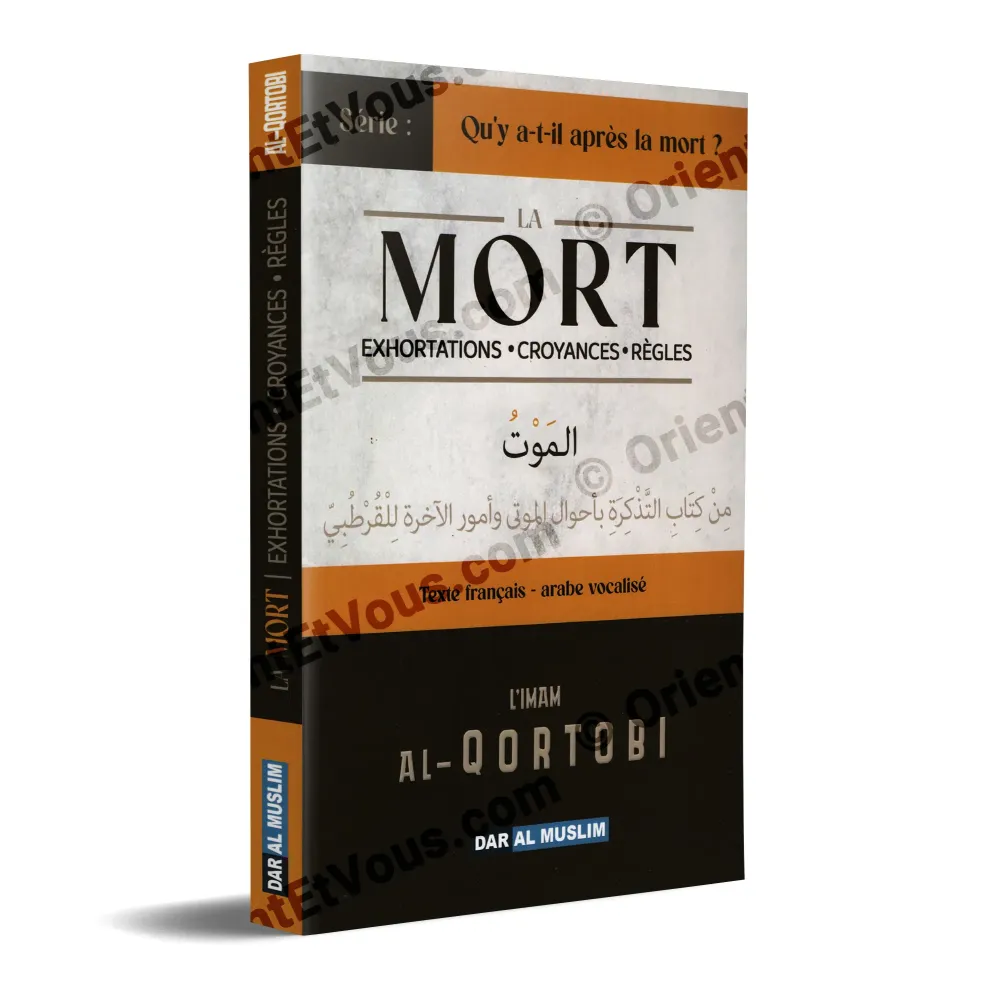


Death – Exhortations, Beliefs and Rulings is a French/Arabic book by Imam al-Qortobi devoted to the reality of death, its trials and the beliefs related to it, while explaining the rulings concerning the dying person, the deceased and funeral rites in the light of the Qur'an and the Sunnah.
Drawing upon Qur'anic verses, authentic hadiths and reports from the righteous predecessors, this book encourages readers to reflect upon death, reform their deeds and prepare for the meeting with Allah while developing an authentic understanding of the first events of the Hereafter.
Death – Exhortations, Beliefs and Rulings is a French/Arabic book by Imam al-Qortobi devoted to the reality of death, its trials and the beliefs related to it, while explaining the rulings concerning the dying person, the deceased and funeral rites in the light of the Qur'an and the Sunnah.
Drawing upon Qur'anic verses, authentic hadiths and reports from the righteous predecessors, this book encourages readers to reflect upon death, reform their deeds and prepare for the meeting with Allah while developing an authentic understanding of the first events of the Hereafter.
You might also like

![La vie après la mort [Al-Fawzan]](https://orientetvous.com/4464-home_default/-french-alhyat-bd-almwt.jpg)
![L’Édification dans les États des Morts et les Événements de l'Au-Delà [at-Tazkira]](https://orientetvous.com/9343-home_default/-french-altdhkrt-bahwal-almwty-wamwr-alakhrt.jpg)
![La mort et la vie dans la tombe [al-Qurtubî]](https://orientetvous.com/9817-home_default/-french-almwt-walqbr-alqrtby.jpg)
Death
Exhortations, Beliefs and Rulings
Imam al-Qortobi
Format: 15 x 21 cm
Number of pages: 149
Language: French / Arabic
Death – Exhortations, Beliefs and Rulings by Imam al-Qortobi brings together the fundamental texts devoted to death. The author addresses its trials as well as the teachings related to it. He sets out the beliefs concerning the separation of the soul from the body. He also presents the rulings concerning the dying person, the deceased and funeral rites. Throughout the book, Quranic verses, hadiths and the sayings of the pious predecessors are brought together. They offer a faithful understanding of the first events that lead from this life to the Hereafter.
Death is never presented here as a mere disappearance. It is described as an inevitable stage that marks the passage from one abode to another. It thus opens a new phase of existence. This perspective gives the reader the keys needed to understand the place of death in the Islamic faith. It also helps him prepare for this encounter with clarity, without giving in to heedlessness or despair.
The richness of this book rests on the method adopted by its author. Each subject is studied on the basis of the revealed texts. It is then clarified by the explanations of the Companions, the Successors and the scholars who followed them. Imam al-Qortobi brings together the various proofs when they address the same question. He explains their meaning and highlights the practical lessons that follow. The reader thus benefits from a coherent presentation that unites belief, exhortation and legal rulings without separating them.
This approach also gives significant weight to accounts reported from the earliest generations of Muslims. Far from being mere illustrations, they help the reader understand how these teachings were lived in practice. They also show the profound effect that the remembrance of death produced on those who were fully conscious of their return to Allah.
One of the book's main objectives is to remind the reader that preparation for death begins well before life's final moments. It starts long before the last instants of life. The believer should not merely know that death is certain. This certainty must transform his behaviour, his use of time and his relationship with worldly possessions. This is why the remembrance of death occupies a central place in the book. It is not meant to instil fear alone, but to encourage repentance, self-reform and an increase in good deeds.
Many such reminders are placed by Allah along the path of His servants. Illness, physical weakness, old age and the loss of loved ones all recall the fragility of the human condition. They invite everyone to reflect on their own preparation. Visiting graves is presented as another way to revive this awareness. It requires, however, genuine reflection rather than a mere habit.
Among the teachings developed, an important distinction is drawn between sincere trust in Allah's mercy and false hope, which leads some to persist in their sins while relying on divine forgiveness. According to the author, a true good opinion of Allah is necessarily accompanied by obedience, repentance and constant effort to reform one's conduct. This distinction invites the reader to examine his own state before death makes any return impossible.
Several passages are also devoted to the prohibition of wishing for death as a way of escaping life's difficulties. As long as the believer remains alive, he can still increase his good deeds and obtain Allah's forgiveness. He can thus improve his spiritual state. However, safeguarding one's religion remains the absolute priority, as shown by the texts referring to the fear of one's faith being severely tested.
A significant part of the book is devoted to life's final moments. The pangs of death are described in light of the revealed texts. One essential reminder emerges from this: their intensity never allows one to judge the worth of a believer. Prophets, the righteous and the pious have all experienced this trial. For the sincere believer, such suffering may contribute to the erasure of certain sins. It also contributes to raising his rank before Allah.
The question of repentance then naturally arises. It remains open as long as the death agony has not begun. This invites everyone not to delay their return to Allah. True repentance is not merely a word spoken by the tongue. It involves regret, immediately abandoning the sin and firmly resolving never to return to it. When the rights of others are involved, it also requires making amends for the wrongs committed. Thus, preparing for death becomes above all a profound reform of the heart and one's deeds.
The book also gives significant attention to the causes that lead to a good or a bad ending. The habits maintained throughout life often accompany a person to their final moments. Conversely, steadfastness in worship, the remembrance of Allah and sincerity prepare an ending in keeping with faith. The many accounts reported give a concrete dimension to these teachings and help measure the importance of deeds accomplished before death occurs.
The book then describes the soul's departure, the welcome reserved for the believer, and what awaits the soul deprived of divine mercy. The first events following death are also discussed, with this constant reminder: death does not mark the end of existence, but the beginning of a new stage in which the consequences of faith and deeds accomplished during earthly life appear.
Beyond its doctrinal character, the book offers practical guidance to help believers in situations everyone may face. It explains the attitude to adopt towards a dying person, the recommended supplications, and the composure to maintain in the face of a loved one's death. It also details the essential rulings concerning funerals, the shroud, burial and supplications on behalf of the deceased.
A truth runs through the entire book: possessions and loved ones eventually leave the deceased, while his deeds remain his true companion. This perspective gives full meaning to the exhortations that run throughout the book and invites the reader to direct his efforts toward what will continue to benefit him after death.
Death – Exhortations, Beliefs and Rulings is a selection drawn from al-Qortobi's celebrated encyclopaedia devoted to the states of the dead and the events of the Hereafter. This edition was designed to offer more direct access to the most useful passages while preserving the richness of the author's teachings.
Because it brings together the foundations of belief, spiritual exhortations and the practical rulings related to death, Death – Exhortations, Beliefs and Rulings is a valuable read for anyone wishing to deepen their understanding of this essential area of Islamic belief. More than a simple doctrinal study, this book reminds us that knowledge of death only has value if it leads to reforming one's deeds, purifying one's heart and preparing to meet Allah.

No customer reviews for the moment.


![Le paradis et ses délices [Ibn Kathir]](https://orientetvous.com/7883-home_default/-french-wsf-aljnt-wmafyha-mn-nym.jpg)
![Le Paradis [al-Qurtubî]](https://orientetvous.com/9951-home_default/-french-aljnt-wma-ja-fyha-wfy-sftha-wnymha-alqrtby.jpg)

![Les signes de la fin du Monde [al-Qurtubî]](https://orientetvous.com/9820-home_default/-french-ktab-alftn-walmlahm-washrat-alsat-alqrtby.jpg)
![Les signes de la fin des temps [Al-Wabil]](https://orientetvous.com/57-home_default/-french-ashrat-alsat.jpg)
![Le paradis [Ibn Qayyim]](https://orientetvous.com/327-home_default/-french-mkhtsr-ktab-hady-alarwh-aly-blad-alafrah.jpg)
![Le Paradis et l'Enfer [Ar-Râjihî]](https://orientetvous.com/5903-home_default/-french-aljnt-walnar-alrajhy.jpg)
![Le châtiment de la tombe [Ar-Râjihî]](https://orientetvous.com/5900-home_default/-french-dhab-alqbr.jpg)